World Brain Tumor Day: Raising Awareness, Supporting Research, and Advancing Hope
The Human Experience Behind the Condition
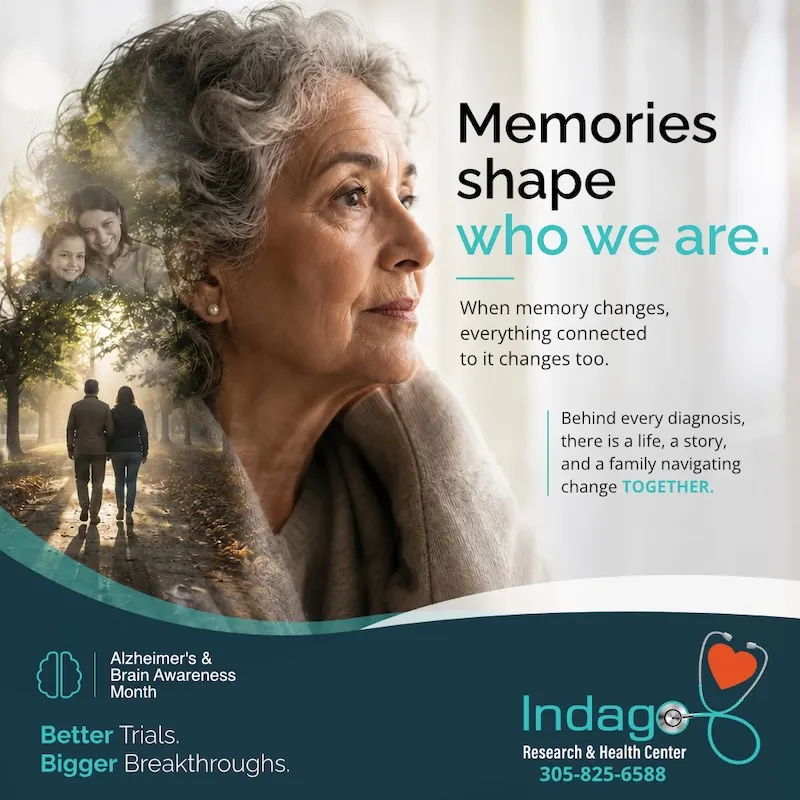
Memory shapes how we experience the world.
It connects us to the people we love, the moments that define us, and the routines that give structure to everyday life. When Alzheimer’s disease or other cognitive conditions begin to affect memory and thinking, the impact reaches far beyond clinical symptoms. It touches families, caregivers, support networks, healthcare teams, and entire communities.
For many families, the journey begins quietly. A missed appointment. A repeated question. A familiar task becoming more difficult. At first, these changes may seem small or easy to explain away. Over time, they can become daily challenges that affect independence, communication, safety, and quality of life.
During Alzheimer’s & Brain Awareness Month, we recognize the human experience behind the condition: the patients navigating change, the families adjusting with resilience, the caregivers carrying daily responsibility, and the researchers working to advance what comes next.
Understanding the Impact of Alzheimer’s Disease
Alzheimer’s disease is a progressive neurological condition that can gradually affect memory, reasoning, communication, and other cognitive functions. As populations continue to age, brain health has become one of the most important public health conversations of our time.
Its impact extends across many layers of life. Patients may face increasing difficulty with daily routines. Families may need to make complex care decisions. Caregivers may experience emotional, physical, and financial strain. Communities and healthcare systems are also challenged to provide education, support, and access to resources.
Awareness matters because early conversations can create space for recognition, medical guidance, and planning.
When individuals and families understand potential changes in memory or cognition, they are better prepared to seek support and ask informed questions.
Why Awareness Matters
Conversations about brain health help reduce fear, uncertainty, and isolation.
They also build empathy. Behind every diagnosis is a person with a history, a family, a voice, and a life that deserves to be treated with dignity. At Indago, this perspective is central to how we understand clinical research and community health.
Awareness also strengthens public understanding of the role research plays in advancing future care. Every meaningful step forward in medicine begins with knowledge built through observation, evidence, participation, and collaboration.
The Role of Research
Research continues to drive progress in the understanding of Alzheimer’s disease and other neurological conditions.
Advances in neuroscience, diagnostics, biomarkers, and potential therapeutic approaches are possible because researchers, healthcare professionals, study participants, families, sponsors, and communities work together to expand scientific knowledge.
Clinical research provides the evidence needed to better understand how neurological conditions develop, how they affect different populations, and how future treatment strategies may continue evolving. Every study contributes information that helps move the field forward and supports the pursuit of better outcomes for future generations.
This work requires precision. It also requires trust.
Participants and families who engage with research contribute to something larger than themselves. Their involvement helps create the foundation for future discoveries, future treatment possibilities, and a more informed understanding of brain health.
Moving Forward Together
Progress in brain health depends on awareness, education, research, and collective commitment.
Every conversation that increases understanding matters. Every family that feels less alone matters. Every study that expands knowledge matters. Every participant who contributes to research helps create new possibilities for the future.
At Indago Research, our commitment is rooted in the belief that clinical research should protect trust, dignity, and human connection while advancing scientific progress. We remain dedicated to supporting research, promoting community awareness, and contributing to a future where innovation and compassion continue working together to improve lives.
This month, we recognize the patients, families, caregivers, healthcare professionals, researchers, and study participants whose dedication continues helping advance the future of brain health.
Better Trials.
Bigger Breakthroughs.